
Published
Many people moving to Seoul for a posting at an embassy or a global company face the same early decision: rent a furnished home and move in with a suitcase, or rent an unfurnished one and fill it with your own shipment or new purchases. Neither choice is right for everyone. This guide explains what the two terms usually cover in Seoul, what to put in writing before you sign, who is responsible for repairs under Korean law, and what to plan for when you move out.
What “Furnished” and “Unfurnished” Mean in Seoul Listings
The two words are used loosely. A home described as unfurnished may still come with some appliances or built-in storage, and a home described as furnished may include only part of the furniture. The only reliable answer is the item list for that specific home, so treat the label as a starting point and ask what is actually staying in the unit.
Fully furnished
Beds, sofa, dining table, storage and the main appliances are in place, and you can live in the home from the first night. This suits a short posting, a single professional, or a family whose household shipment will arrive weeks after they do.
Partly furnished
Some items stay and others do not, for example appliances without beds, or beds without a sofa. Partly furnished homes need the most careful item list, because it is easy to assume something is included when it is not.
Unfurnished
You bring or buy the furniture. This suits families on longer assignments, people with a furniture allowance in their relocation package, and anyone who already owns furniture they want to keep using.
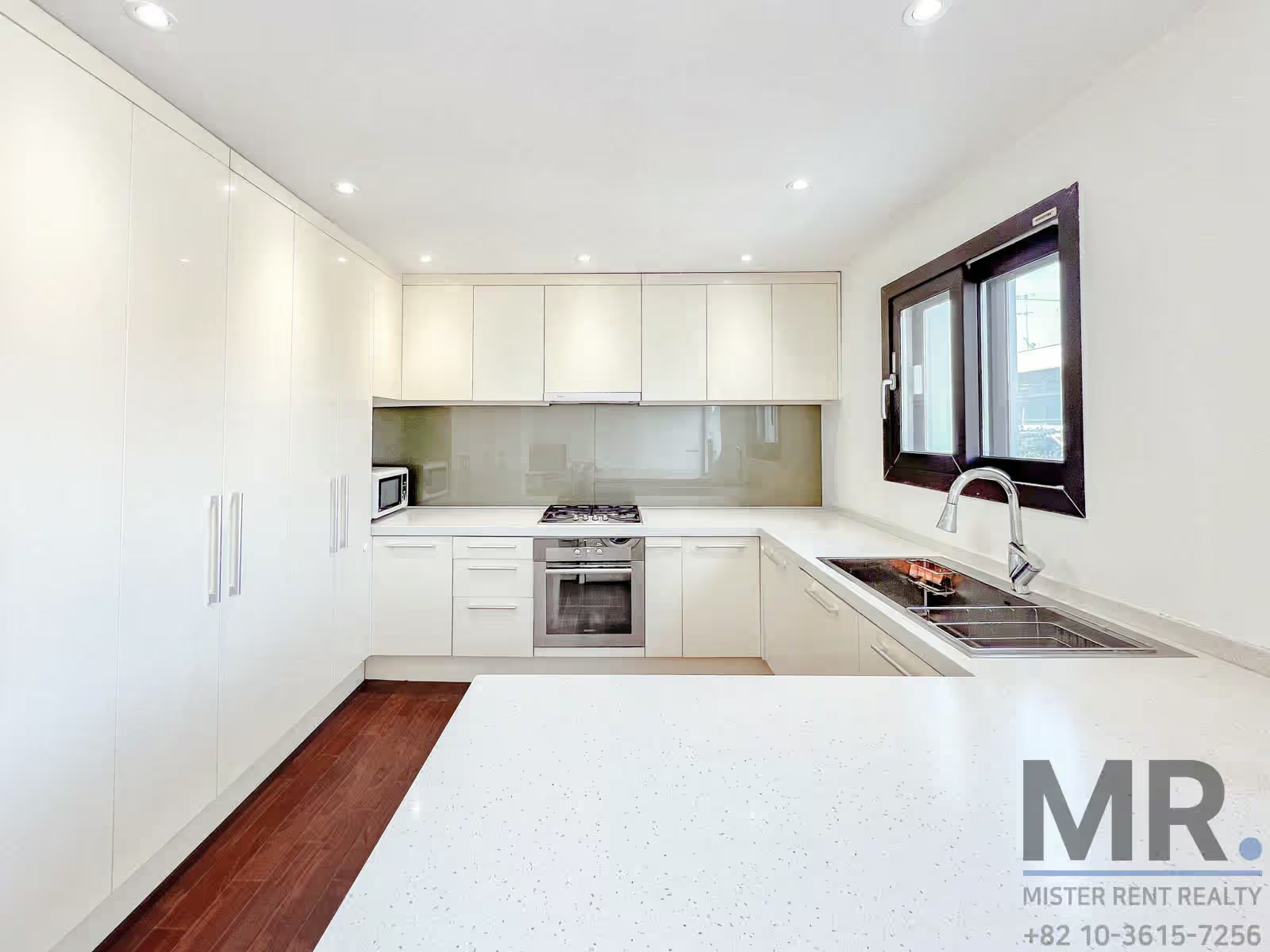
Which Option Fits Your Situation
A few questions usually settle the choice:
- When does your shipment arrive? If your household goods will arrive well after your start date, a furnished or partly furnished home avoids weeks of living out of boxes. Ask your moving company for the expected delivery window before you choose.
- How long is your posting? Buying a full set of furniture for a short stay, and then selling or disposing of it when you leave, is real work. For a longer stay, your own furniture is often more comfortable.
- Who is moving with you? Children’s rooms, home offices and pets change what furniture you need. If you are bringing a pet, our guide to English-speaking vets in Seoul covers registration and care.
- What does your employer cover? Some relocation packages pay for shipping, others for furniture rental or a furniture allowance. The answer often decides the question.
- Which area and school? The supply of furnished homes differs between neighborhoods, so it helps to fix the area first. If school matters, start from homes near international schools in Seoul.
Put the Item List in the Lease
Whatever you choose, write down what stays in the home and attach it to the lease. Korean lease forms have a section for special terms (특약사항), and an inventory written there, or attached and referred to there, is far easier to rely on than a verbal promise. A useful inventory includes:
- Each item that stays in the home, room by room, including appliances and built-in units.
- The brand or model of major appliances, so a broken item can be matched to its replacement.
- The condition of each item on move-in day, with dated photos shared with the landlord.
- Who repairs or replaces each type of item if it breaks during the lease.
- Whether the landlord may remove items, or whether you may ask for items to be removed before you move in.
The inventory sits alongside the other steps of renting in Korea, such as checking the property register and getting a fixed date on your lease. Our step-by-step guide to renting an apartment in Korea as a foreigner walks through those steps.
Who Repairs What: The Default Rules in Korean Law
Korea’s Civil Act sets default rules for leases. Your lease can add more detailed terms, which is another reason to list furniture and appliances clearly.
- The landlord’s duty. Under Article 623 of the Civil Act, the landlord must hand over the leased property and keep it in the condition needed for its use while the lease continues.
- The tenant’s duty to report. Under Article 634, when the leased property needs repair, the tenant must notify the landlord without delay, unless the landlord already knows.
- Repairs the tenant pays for. Under Article 626, a tenant who pays necessary expenses to preserve the leased property can claim them back from the landlord. For expenses that improve the property, the landlord repays at the end of the lease only if the increase in value still remains.
- Returning the home. Article 654 applies Article 615 to leases: when the lease ends, the tenant must restore the property to its original state and may remove things the tenant attached to it.
In practice, most disagreements come from unclear facts rather than unclear law: whether an item was already damaged at move-in, or whether it was ever part of the lease. A clear inventory and dated photos solve most of that. This section is general information, not legal advice; for a specific dispute, speak to a lawyer.
Moving Out: Furniture, Appliances and Bulky Waste
If you rented unfurnished and bought furniture locally, plan early for what happens to it when you leave. Leaving your own furniture behind without the landlord’s written agreement can conflict with the duty to return the home in its original state.
Bulky items
Large household items such as furniture are not put out with regular trash. Each district (gu) in Seoul runs its own reporting process and fees for bulky waste, and the Seoul Metropolitan Government has said it is working to align the different district rules and fees. Check your district office’s website for the current method. Our guide to trash and food waste disposal in Seoul covers everyday waste as well.
Large appliances
Seoul promotes a free home pickup service for large waste appliances such as refrigerators, washing machines, air conditioners and TVs. It works by advance booking through 1599-0903, the website 15990903.or.kr or KakaoTalk, and there is no disposal fee, according to Seoul’s environment information page. Check the booking site for available dates and eligible items before you schedule your move.
Start Your Search
Furnished and unfurnished homes appear across our listings. For example, this furnished 3-bedroom villa in Hannam-dong near YISS shows the kind of photos and details worth checking. If you are looking in central Seoul, you can start with Itaewon, Hannam and UN Village or Seorae Village and Banpo, and you can browse all recent rental listings in Seoul. Tell Mr. Rent Realty which items you need in the home, and we can ask landlords about furnishing before you visit.
Official Sources
- Civil Act (민법), Articles 615, 623, 626, 634 and 654 — Korea Law Information Center (law.go.kr)
- Seoul plans unified standards for bulky waste disposal — Seoul Metropolitan Government (mediahub.seoul.go.kr)
- Free home pickup of large waste appliances — Seoul Metropolitan Government (news.seoul.go.kr)